


Fish Biodiversity Quantification
- Glasgow Egypt Expedition

- May 21, 2019
- 2 min read
Updated: May 23, 2019
Our next project is titled “Quantifying Fish Community Diversity and Biomass at Varying Depths in the Red Sea” and will be carried out by Robbie. Coral reefs are the greatest supporters of biomass than any other Ocean Habitat. Robbie aims to investigate the species diversity between 10-80m depths using a camera drop system. Robbie and a team member will work along an 100m transect line and will drop the camera at 20m intervals. One member will drop the camera rig, whist the other will use a GPS tracker to record the precise location. The camera will be dropped to the desired depth and after a waiting period to let the sediment settle and the fish acclimatise the camera will record for 2 minutes. The camera is then retrieved, and the video analysed, identifying fish species and recording their diversity. A specialist computing software will then be used to measure the length of fish caught on camera which will produce data related to biomass, fulfilling the other aim of the study. As studies similar have been conducted in two previous years, the data collected will be able to be compared with data collected on those previous years. These comparisons will highlight any significant changes observed and action will be taken if changes seen are significantly detrimental to the health of the fish community.
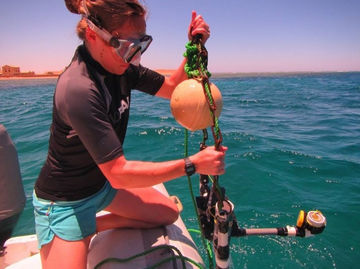
This study is crucial as large quantities of the Red Seas Mesophotic coral ecosystems (MCE) are understudied. MCE’s are defined by depth, areas of coral reefs between 30-150m are MCE’s. Robbie’s research will be working partly within the MCE range and therefore helping to build on the previous database quantifying and comparing coral reef fish communities at varying depths on the El Quseir reefs. The camera drop techniques allow for fish communities to be observed and studied with a minimal impact on fish activity. The coral reefs in the Red Sea are amongst the healthiest in the world and the beauty of these ecosystems attract huge amounts of tourists to the area. It is therefore imperative that the fish abundance and biodiversity is measured to maintain the coral reefs beauty.
A message from Robbie I am excited about getting the project started and discovering the beauty of the underwater world. Although this project will form a vital part of my honours research, it has added importance, strengthening the research conducted by fellow researchers in the past. With the Red Sea coral reefs being the healthiest in the world it is important to protect and preserve them, making studies such as these even more important.


Comments